
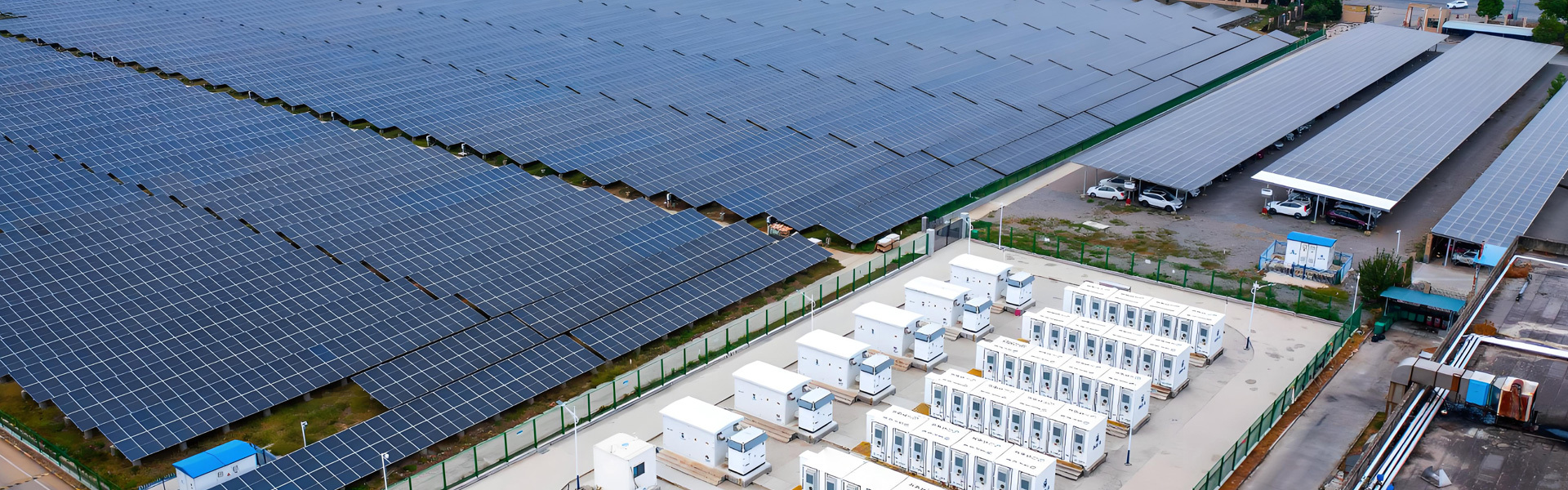
Zero-carbon commercial complex
Hunan Meini Supermarket Co., Ltd.
Hunan Meini Supermarket Co., Ltd. is a retail chain enterprise. Currently, it has branch companies or subsidiaries in Changsha, Zhangjiajie, Changde, Xiangxi Autonomous Prefecture, etc. The company's first store was opened in Zhangjiajie City in 1998. After more than ten years of development, it has become a large commercial retail enterprise in the commodity circulation field in Northwest Hunan. The company currently has 35 operating stores, with a total operating area of more than 300,000 square meters, and an annual sales revenue of 1.5 billion yuan.
I. Reduce electricity costs and improve economic efficiency
1.1 Peak-valley arbitrage:
Hunan implements time-of-use electricity pricing (peak electricity prices can be more than three times higher than off-peak electricity prices). The energy storage system can charge during off-peak hours (around 0.3 yuan/kWh) and discharge during peak hours (over 1 yuan/kWh), significantly reducing electricity costs.
Case study: Supermarkets typically have peak electricity consumption during the day (air conditioning, lighting, etc.). Energy storage can cover this high-priced electricity demand, saving an estimated 20%~40% on electricity bills.
1.2 Demand charge optimization:
Supermarkets have fluctuating electricity loads (e.g., peak passenger flow during holidays). Energy storage can smooth the load curve, reduce the peak demand power, and reduce demand charges (demand charges for large and medium-sized commercial and industrial users in Hunan can account for up to 30%).
1.3 Photovoltaic self-generation and storage peak regulation:
If equipped with rooftop photovoltaics, the microgrid can store excess green electricity for use at night or on cloudy days, improving the green electricity consumption rate (Hunan has average solar resources, but photovoltaic + energy storage can still reduce grid electricity purchases by 10%~30%).
II. Ensuring the stability of power supply
2.1 Emergency backup power:
Supermarkets have high requirements for power continuity (e.g., cold chain storage, cash register systems). The microgrid can seamlessly switch during power outages, avoiding spoilage of fresh goods or losses due to business interruption.
Case study: During the summer power rationing in Hunan in 2022, supermarkets equipped with energy storage could maintain the operation of key equipment for 2~4 hours.
2.2 Voltage/frequency support:
Energy storage can quickly adjust power quality, preventing damage to precision equipment (such as cold chain compressors) due to voltage fluctuations.
III. Green transformation and policy benefits
3.1 Carbon emissions and ESG improvement:
Microgrids reduce reliance on thermal power, reducing the company's carbon footprint, aligning with Hunan's "dual carbon" policy orientation, and enhancing brand image (especially for environmentally conscious consumers).
3.2 Policy subsidies and benefits:
Hunan energy storage subsidies: Changsha and other places have provided subsidies of 0.3 yuan/kWh for integrated photovoltaic and storage projects.
Demand response benefits: Participating in grid peak regulation can obtain compensation (the highest standard in Hunan in 2023 is 4 yuan/kWh).
Green electricity trading: In the future, green electricity indicators can be sold or carbon emission reduction benefits can be obtained.
IV. Business model innovation
4.1 Charging piles + energy storage linkage:
If the supermarket is equipped with charging piles (such as in the parking lot), the microgrid can optimize the charging load, reduce the cost of grid expansion, and even increase revenue through charging services.

We are committed to providing our customers with high-quality products and timely, thoughtful service
Contact Information
Sales Hotline:86-17373268008 (Ms. Liu)
86-8074423333(Mr. Zhao)
After-sales Hotline:86-18974461678
Email:energy@xilkdl.com
Company Address: No. 5, Baosixilu Road, Xiangtan Economic Development Zone, Xiangtan Comprehensive Bonded Zone, Standard Warehouse No. 3
Copyright © Hunan Xilaike EnergyStorage Technology Co., Ltd
This site supports IPv4 IPv6 .
Powered by www.300.cn ChangSha